Most owners don’t think about valuation until they’re preparing to sell. But valuation readiness matters long before a transaction ever appears on the horizon.
Becoming valuation ready is not about chasing a buyer. It’s about building a stronger, calmer, more transferable business today; one with predictable financials, less key-person risk, healthier teams, and real optionality for the future.
A Value Mindset
Valuation begins with mindset, not math. Everyday decisions either increase or decrease value. The business is worth more when it can operate clearly, profitably, and consistently, with or without the owner in the room.
A valuation mindset is intentional rather than urgent. It asks:
- Can someone step in and lead this business without disruption?
- Are our numbers clean, consistent, and trustworthy?
- Where are we exposed financially, operationally, or structurally?
- Are we building something that is transferable rather than personality-dependent?
This mindset doesn’t just help in a sale scenario. It helps owners sleep better, lead with clarity, and make confident decisions today.
Five Drivers That Shape Business Value
Across industries, valuation is influenced by five fundamentals:
- Financial performance
- Operational efficiency
- Customer and revenue mix
- Leadership and talent
- Market positioning and differentiation
Strengthening even a few of these will increase the value and stability of your business long before a buyer shows up.
1. Financial Performance
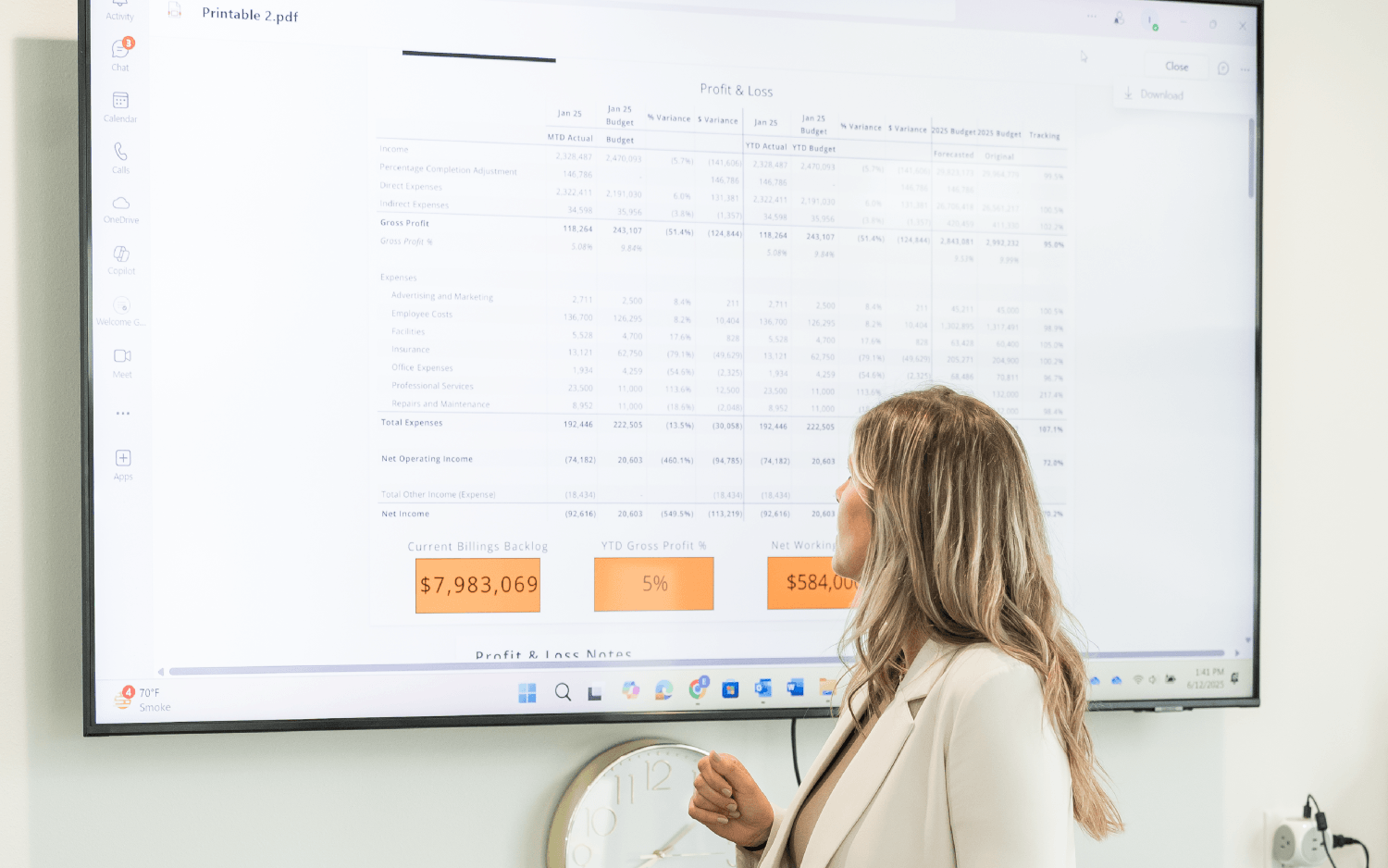
Financial clarity is one of the most meaningful value drivers. Buyers want to see reliable gross sales, healthy EBITDA, clean books, and predictable margin patterns. The better the story inside the numbers, the easier your valuation becomes.
Multipliers vary widely depending on growth, size, customer concentration, industry norms, recurring revenue, and owner dependency. As financial predictability improves, risk decreases and value increases.
If your business has never created rolling forecasts, now is the time. A 12-month forecast gives you visibility into margin performance, hiring decisions, capital needs, and strategic direction. That clarity alone increases value, even if you never sell.
2. Operational Efficiency
A business becomes more valuable when its success no longer sits on the shoulders of one person. If systems, customer relationships, or operational decisions all flow through a single leader (especially the owner) buyers see risk instead of stability.
Operational readiness means:
- Core work is documented and repeatable
- Roles and expectations are clear
- Teams can execute without constant escalation
This is not just an exit strategy. It’s a freedom strategy. When your business no longer depends on your daily heroics, you gain margin, succession options, and true valuation strength.
3. Customer & Revenue Mix
Predictability is valuable. If your revenue only comes from one major client or one big recurring project, valuation risk goes up. Buyers naturally ask: “What happens if that one relationship changes?”
A valuation-ready business protects itself by building:
- More diversified revenue streams
- Cleaner renewal or recurring agreements
- Lower customer concentration risk
Even adding a few recurring contracts or maintenance programs can dramatically improve predictability and confidence.
4. Leadership & Talent
A strong management team is one of the most attractive valuation assets. Buyers want to see that the business can make day-to-day decisions without the owner, that talent is retained, and that succession is clear.
Leadership systems, culture, delegation, coaching, and internal development all build value. When people are trusted and equipped, continuity becomes easier and transitions become safer.
And yes...culture is financially meaningful. A healthy culture reduces turnover, protects customer experience, and increases transferability.
5. Market Position
Businesses that are clear about who they serve and what differentiates them have stronger leverage and healthier valuation. Brand strength matters! So do proprietary tools, specialty expertise, and customer reputation.
Differentiation is not just a marketing idea. It’s a valuation asset. When you’re not competing solely on price, you protect your margins and make your business harder to replace.
Common Risks That Lower Valuation
If you want a stronger valuation story, these are the red flags to address early:
- Heavy owner dependency
- Poorly documented financials
- No recurring or predictable revenue
- Major customer concentration
- Reactive operations without scalable systems
Every one of these can be corrected gradually and calmly, and every correction increases confidence for you and for any future investor, partner, or buyer.
A Calm Valuation Roadmap
Improving valuation is not a sprint. It’s rhythm and structure:
- Assess where you stand today
- Identify the biggest levers for your industry
- Implement scalable financial, operational, and leadership systems
- Review progress annually with a valuation checkup
This roadmap strengthens your business whether or not you ever sell.
Why Build Value Now
Valuation readiness gives you options. Options to sell when timing is right, pass the business to family, step back without panic, or simply lead a business that is less stressful and more predictable.
Even if a sale never happens, the work of becoming valuation ready creates clarity, margin, and peace of mind today.
Watch the Full Webinar
Want the deeper dive with examples and industry multiples?
👉 https://youtu.be/WAKm49jyOyQ
Closing Thought
A valuation-ready business is transferable, predictable, and resilient. It protects margin, strengthens leadership, and builds optionality, even if a sale never happens.
One step at a time, consistently, builds a calmer business and a stronger story.